
TUFLOW Sub-Grid Sampling
Explaining Changes since 2019

While reviewing a model last week, I realized that proper messaging is crucial to software success. The XPSWMM model leveraged XP2D Extreme (or TUFLOW HPC), and the site had a slight twist. The reviewer asked about grid rotation, and I had to proceed to explain what and why we do not need to rotate the grid. Let me share some of that here.
Let’s break down the grid, various model types, and how TUFLOW Sub-grid sampling works.
There are a few SWMM5 semi-2D models out there. They rely on the 1D equations but leverage a routine to build a mesh of 1D elements on the surface. These elements have a length and a width, and corrections must be made to avoid wall effects and overlapping channel segments when mapping the 2D depths and velocity.
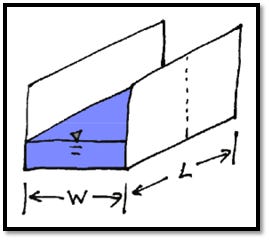
The conventional TUFLOW solver represents the 2D cell, as shown in the image below. This method is a coarse representation of topography or stream bathymetry. The XPSWMM documentation still contains this gem: “Determining the minimum cell size required to model the hydraulics accurately enough to meet the study’s objectives. Preferably at least three to four cells across the major flow paths (depending on the topography). Minor flow paths may be more coarsely or not represented if they play no significant role hydraulically in regard to meeting the modeling objectives..” (retrieved 7/29/2024 from Innovyze help)
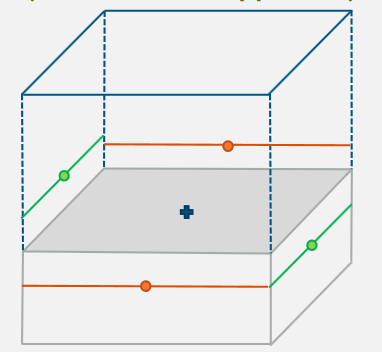
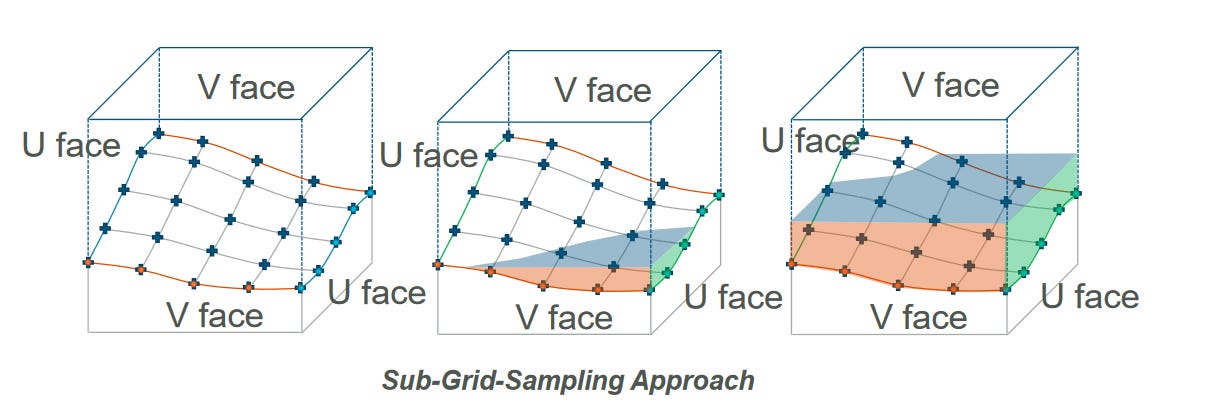
With the advent of Sub-grid sampling, introduced with the TUFLOW 2020 release, each cell can sample the underlying terrain to acquire the cell face section and develop volume-depth curves for each cell. As flow begins to rise along the front face, it can remain below the cell center, but it engages the side of the cell, passing water along the two wet edges.
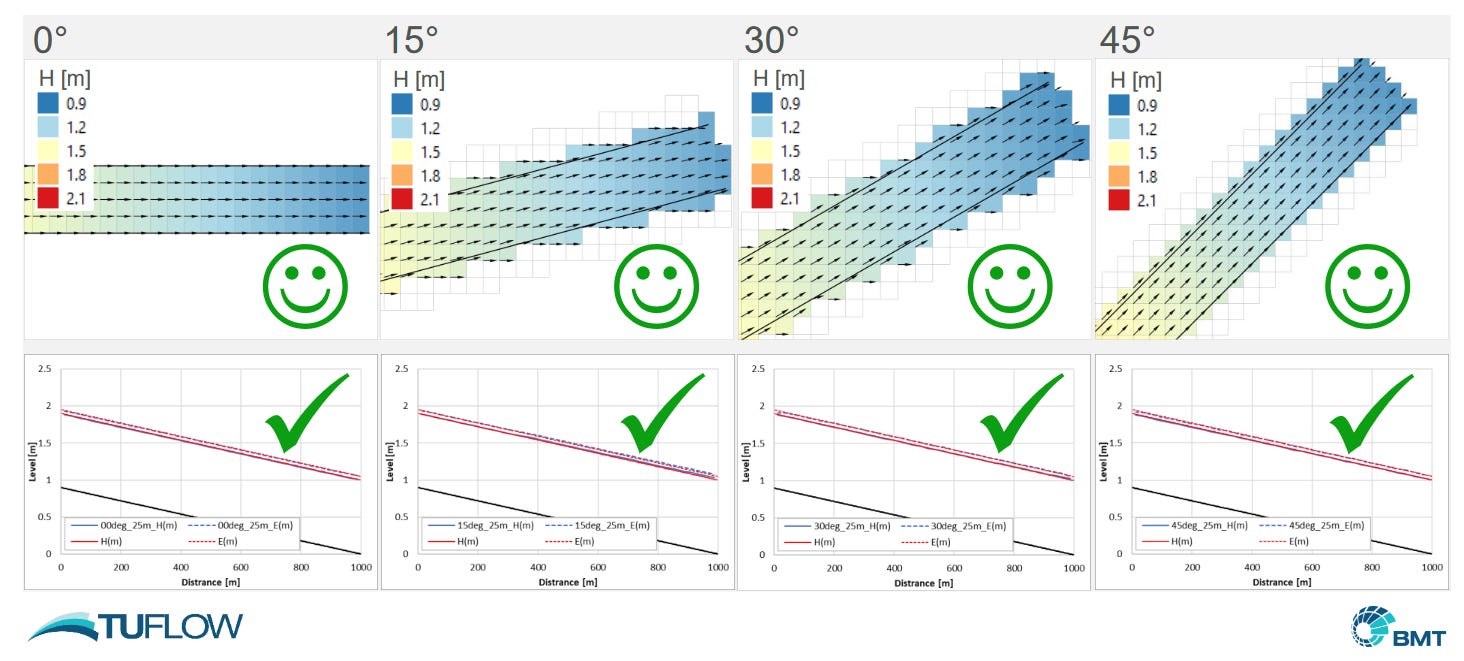
The best example of the benefit of SGS comes from a rotated deep channel example shown in the Syme presentation noted below. When using a perfectly aligned channel and grid, the calculated simulation water surface elevation matches expected Manning calculations for water surface elevation and energy grade line. However, as the grid rotates against the channel, the edges cause discontinuities in velocity direction and cause a poor fit for expectations. The edge ‘pixelization’ introduces reductions in flow, and discontinuities in how the conventional grid struggles with the flow edge.
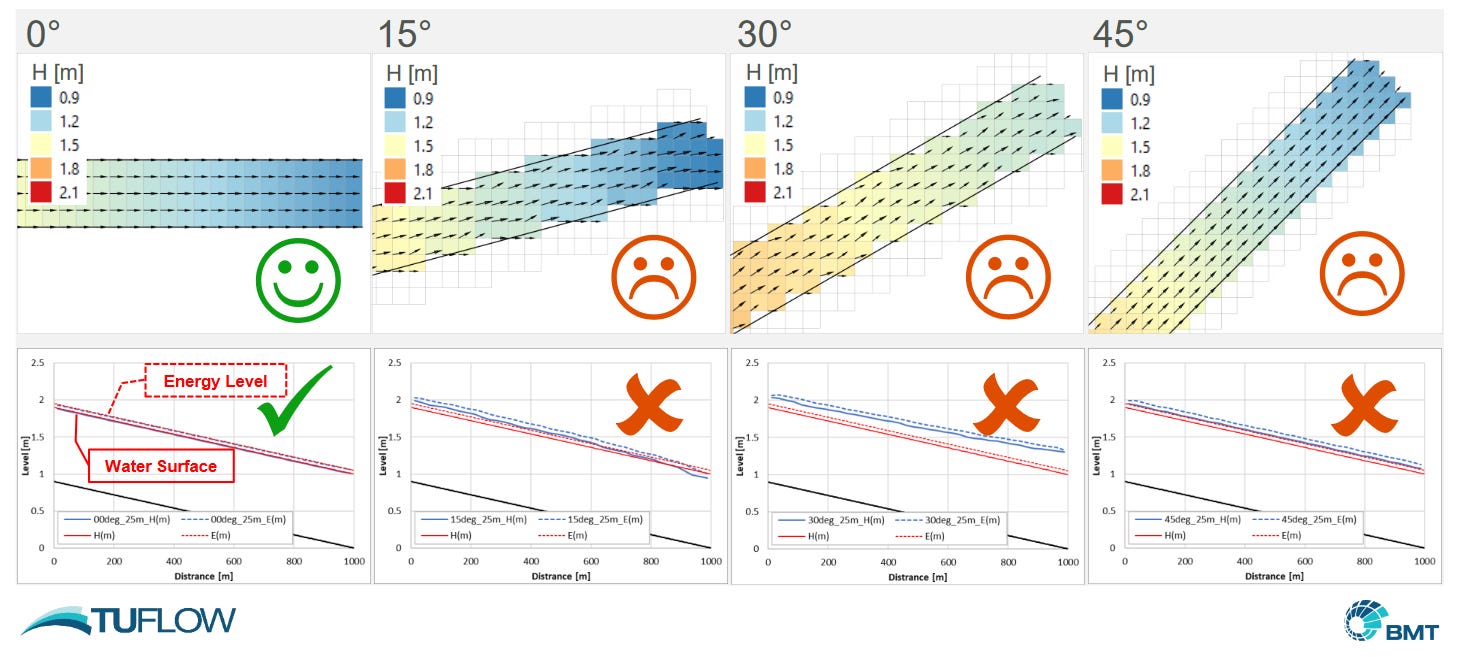
By turning the Sub-grid sampling on, the TUFLOW simulation matches the calculations regardless of the rotation. Examine the 30 degree images above and below. With Sub-grid sampling - there are more wet cells, even if only a quarter of the cell remain engaged.
The mapping of the correct water surface elevation limit (rather than the coarse cell size) is the next step. With 2023 release, this output can be directly referenced, saving considerable time as post-processing the output is no longer necessary.
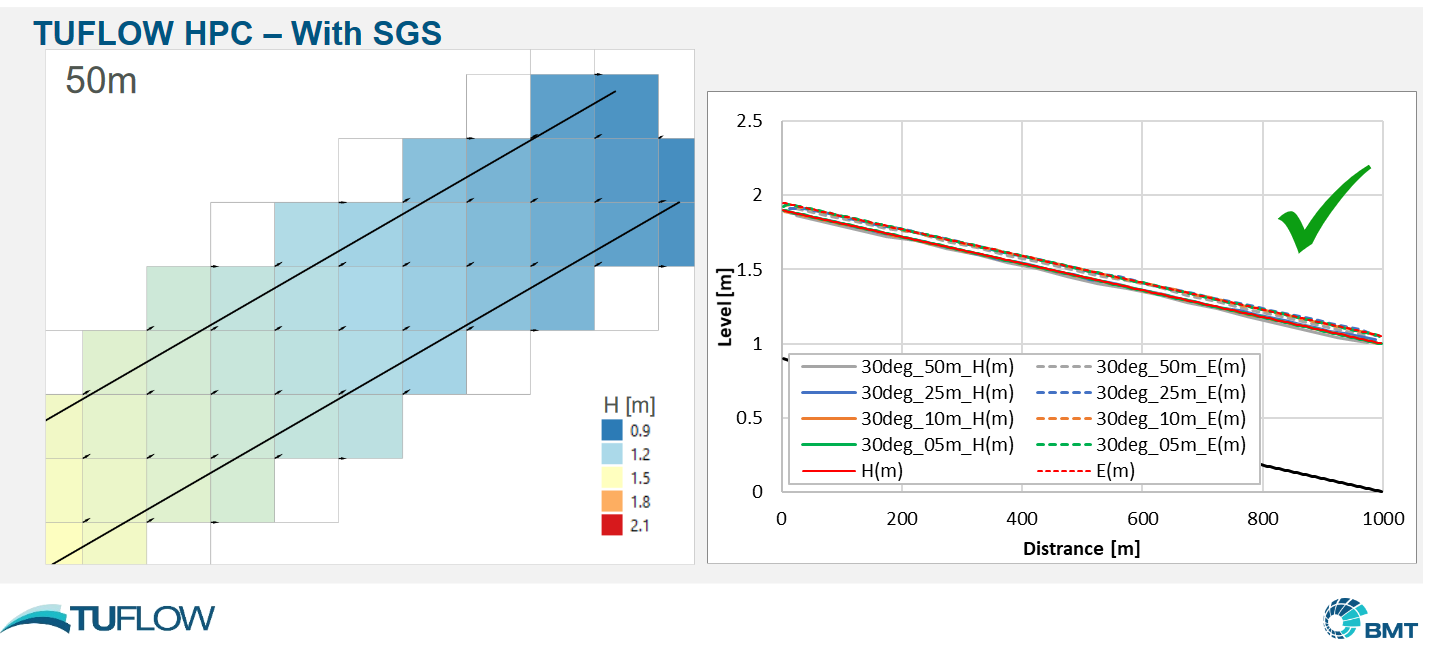
The same can be said for cell size sensitivity. With the sub-grid sampling turned on, the 5m, 10m, 25m, and 50m returned to near-perfect alignment.
References:
Syme (2020) "Recent Advancements in 2D Hydraulic Modelling", Water NZ Symposium
TUFLOW (2020) Sub-Grid Sampling: Step Change in the way we Create and Apply Hydraulic Models